The Appropriateness of Form

In contemporary architecture, the dilemma of appropriate form is ever present. Too big, and you dwarf surrounding buildings and cut off views. Too small, and you limit function and quality of life. Too much glazing, and you have a greenhouse in summer and an icebox in winter. Too little glazing, and you have a dark, unpleasant building. Too abstract and the form takes away from the community fabric, too safe and it becomes entirely swallowed by its surroundings. So the question is – how do we strike a balance in such a way that contributes meaningfully to our clients and their community, while retaining a sense of innovation and progress?
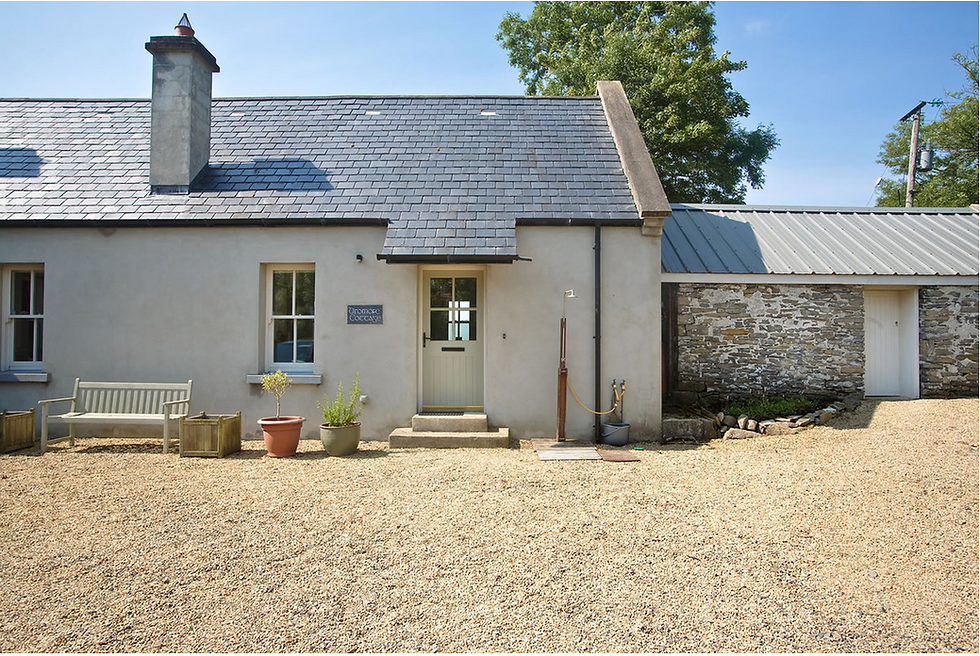
The vernacular architecture of the locality can offer a good starting reference. Historically, buildings evolved and emerged as pragmatic responses to factors such as climate, the availability of local materials, the skills of local labourers or farm hands, and social patterns such as trades or industry. Stone walls, lime render, thatch and, later, slate roof were not aesthetic choices, but results of necessity and accumulated knowledge. Their proportion, logic, detailing and decoration carried an architectural language which was intelligible to the local community because it was rooted in a shared experience. Contemporary architecture should not simply replicate these techniques and materials, but use our understanding to learn from them and maintain a similar approach in regards to material choice and legibility of construction.
Humility of design is always an important part of this discussion. An appropriate, successful building does not command attention through spectacle or excess; rather it earns its place through restraint and clarity. Humility does not imply shyness or lack of ambition – it implies an understanding that architecture is only one simple component of a broader social fabric. Humble architecture acknowledges that which already exists, taking scale, rhythm, and material character into account. It allows room for adaptation and future use – architecture should not be permanent or eternal, but should evolve in a way which serves its users
and the community.
Of equal importance to humility is the relationship between architectural form and the local community. Buildings inherently shape how people gather in, move through, and identify with their surroundings. When a form is developed through careful engagement with local patterns of living, work, and other social interactions, architecture becomes a shared asset rather than an imposed institution. Familiarity of material and legible spatial arrangements foster a sense of shared ownership and continuity. This connection is not achieved through simply imitating historical architecture, but through a careful dialogue with the inhabitants and locality.
Ultimately, the implementation of an appropriate form in architecture is as much an ethical position as it is a design strategy. We must listen before we draw, observe before we impose, and value continuity and identity as much as innovation. In doing so, our architecture remains grounded, relevant, and enriches both place and community over time.